
Frame Lock Protection That Stops Theft
A locked frame can still leave you walking home with missing wheels, a stolen saddle, or a stripped front end. That is the real problem with frame lock protection. It matters, but it does not cover everything a thief can remove in minutes with basic tools or a quick release lever.
If you park in public, commute daily, or leave a higher-value bike outside even for short periods, you need to think beyond a single lock point. Good security starts at the frame, but real theft prevention comes from protecting the parts thieves target most often.
What frame lock protection actually means
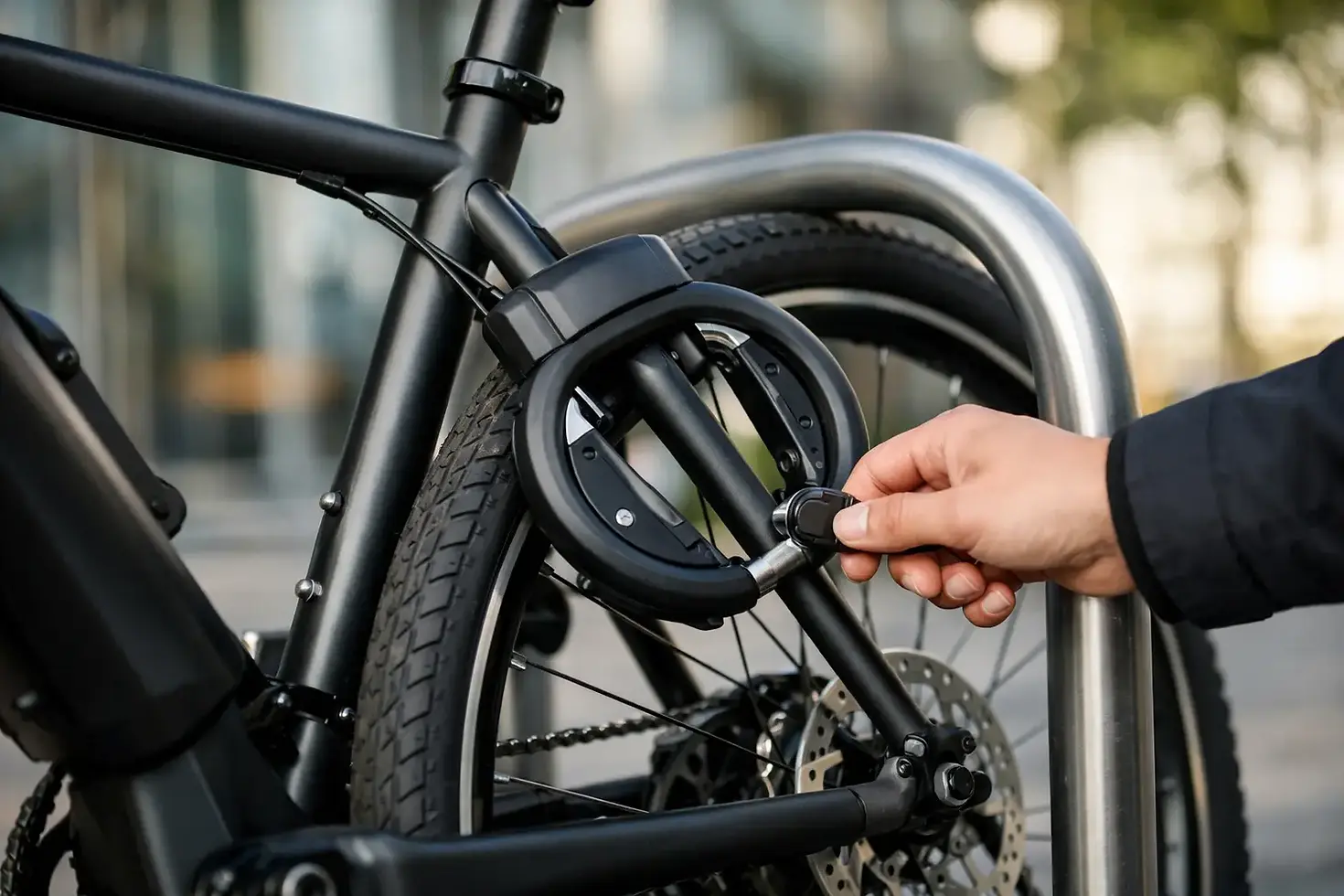
Frame lock protection is any security approach focused on keeping the bike frame attached to a fixed object or preventing the frame itself from being stolen. In practice, that usually means a lock that secures the main triangle, rear triangle, or a dedicated mounting point on the bike.
That sounds obvious, but many riders assume that if the frame is locked, the bike is safe. It is not that simple. A thief does not always need the whole bike to make the theft worthwhile. Wheels, saddles, seat posts, and cockpits are fast, valuable targets. On some bikes, those parts are easier to remove than the frame is to steal.
So frame lock protection is necessary, but on its own, it is incomplete.
Why the frame is only one part of the theft equation
Most bike theft is opportunistic. A thief looks for the fastest win with the lowest risk. If the frame is locked well, they may change tactics instead of leaving empty-handed. That often means taking the front wheel, slipping out the saddle, or removing a component that can be sold quickly.
This is where riders get a false sense of security. They did the right thing by locking the frame, but they still come back to a bike that has been partly stripped. The damage is financial, but it is also practical. A missing wheel or seat post can leave a rider stranded just as effectively as a missing bike.
That is why a smarter security plan treats the bike as a system. The frame needs protection, but so do the removable parts attached to it.
Where frame lock protection works best
Frame lock protection is strongest when it is part of a layered setup. If you are locking up for a quick coffee stop in a low-risk area, a strong frame-focused lock may be enough for the moment, especially if your bike has fewer exposed components and no quick releases.
If you commute in dense urban areas, park near transit, or leave your bike outside at work, the risk changes. Time, visibility, and repeat exposure all matter. The longer your bike sits unattended, the less you can rely on the frame alone.
Bike type matters too. A basic errand bike and a performance road or gravel bike do not attract the same attention. Lightweight wheels, premium saddles, and upgraded parts increase the payoff for a thief. In those cases, frame lock protection should be the starting point, not the finish line.
The biggest gap in most frame lock protection setups
The weak point is usually removable hardware. Quick-release skewers, standard seat post clamps, and common fasteners make theft easier. A thief does not need to defeat the main lock if the expensive parts can be detached in seconds.
This is why component-level security changes the equation. Instead of protecting only the bike frame, it protects the bike where theft actually happens. Security hardware for wheels, saddles, seat posts, and headsets removes the easy opportunity that many thieves depend on.
That approach is especially useful for riders who want strong protection without hauling oversized hardware for every trip. A cleaner setup can still be serious security if it is built around the parts that are most often stolen.
How to build better frame lock protection
Start with the frame because that is still the anchor point. Lock the frame to something solid, immovable, and hard to cut around. Position the lock so there is minimal slack and limited room for tools. Avoid weak signposts, loose racks, or anything that can be disassembled faster than the lock can be defeated.
Then look at what else can disappear. If your front wheel can be removed quickly, secure it. If your saddle and seat post can be taken with one lever or a common tool, secure those too. If your cockpit or headset includes parts that can be loosened easily, account for that risk as well.
This is where a purpose-built security system makes more sense than piecing together random parts. The goal is not to add clutter. The goal is to remove the easy theft points that standard frame lock protection misses.
Frame lock protection vs total bike protection
Frame lock protection is focused. Total bike protection is broader and more realistic.
The difference is simple. Frame lock protection asks, "Can someone take my bike frame?" Total bike protection asks, "Can someone take any valuable part of this bike?"
That second question is the one more riders should be asking. It reflects how theft actually happens in cities, on campuses, outside offices, and at event parking. Many thieves do not care whether they leave with the whole bike or just enough parts to make the theft profitable.
A complete security strategy addresses both outcomes. It keeps the frame where you left it and makes the attached components much harder to remove. That is the practical advantage of a system designed around the entire bike, not just one lock point.
When frame lock protection is not enough
There are situations where relying mostly on the frame is a gamble. Overnight outdoor parking is one. High-theft neighborhoods are another. So are repeated parking routines where a bike is left in the same place at the same time every day. Predictability gives thieves time to study your setup.
Travel adds another layer of risk. If you are parking in unfamiliar areas or using a bike for commuting and errands across different locations, you do not always get to choose the ideal rack, lighting, or foot traffic. In those cases, the more your security depends on a single frame lock, the more exposed your components become.
This does not mean every rider needs the same setup. It does mean every rider should match protection to risk. A casual weekend rider may need less than a daily commuter. A carbon bike with premium components needs a different level of defense than a basic utility bike. Security is not one-size-fits-all, but incomplete security is a common mistake.
What smart riders look for in frame lock protection
They want security that works in the real world. That means hardware that is hard to tamper with, practical to use every day, and designed for the parts thieves target most. Weight matters. Convenience matters. Installation matters. If security is too bulky or annoying, riders stop using it consistently.
The best setups balance strong protection with everyday usability. That is why component-specific security has become such an effective complement to frame lock protection. It adds defense without turning every ride into a packing exercise.
Pinhead Bike Locks was built around that exact idea - protect the entire bike, not just the frame. For riders who are tired of replacing stolen parts or wondering what will be missing when they get back, that approach solves a problem traditional frame-first thinking often leaves behind.
The real goal of frame lock protection
The goal is not just to keep a thief from taking your bike in one piece. The goal is to make your bike a bad target, period. That means removing the fast wins, protecting the valuable parts, and closing the gaps that thieves count on.
If your current setup only secures the frame, you have made a good start. Just do not mistake a start for full protection. The smartest move is to secure the frame and the components that make your bike worth stealing in the first place.
A bike that is hard to strip is a bike that is far more likely to be left alone.


Comments