
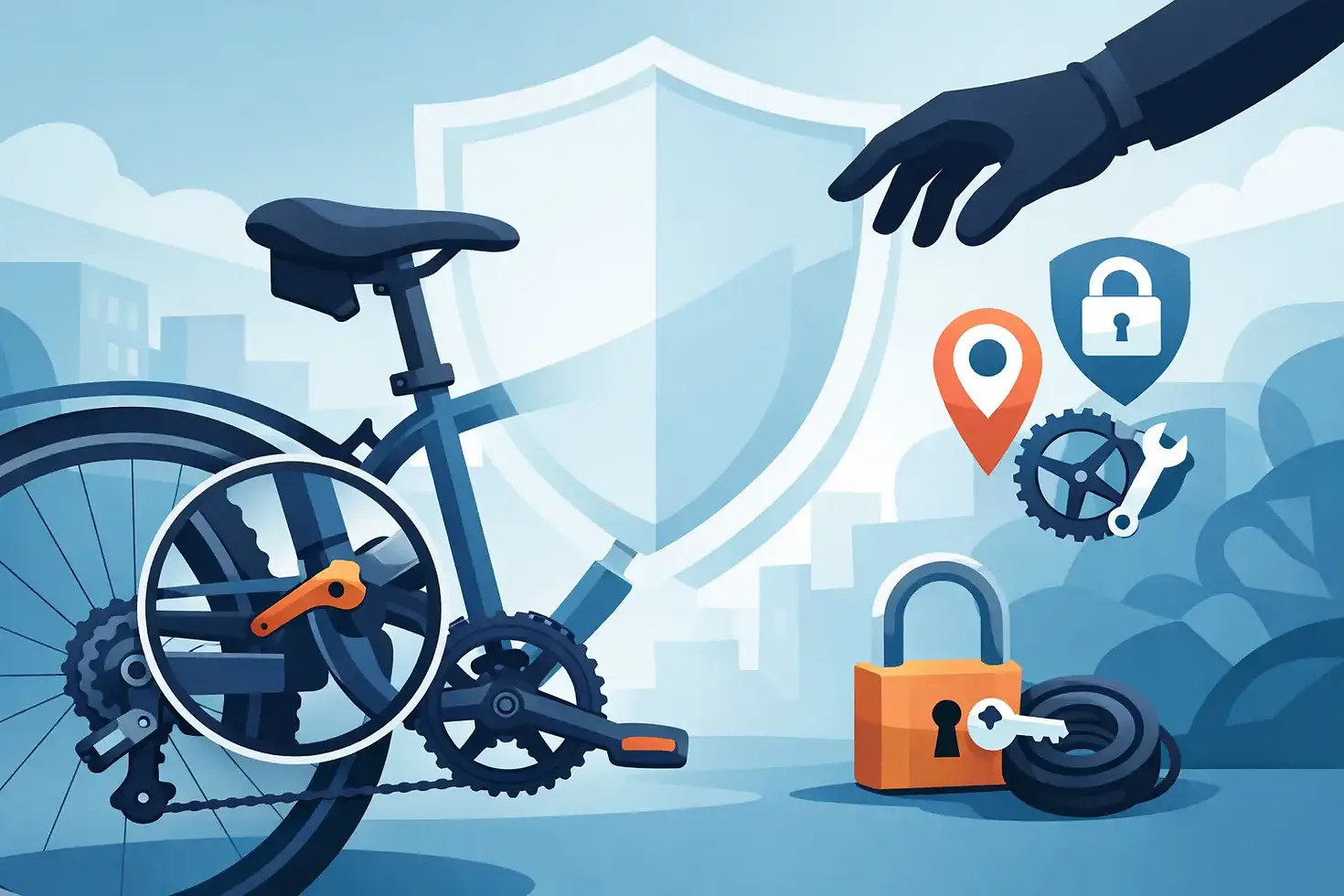
How to Protect Bike Components From Theft
A locked frame can still leave you walking home with no front wheel, no saddle, or a missing seat post. That is why riders who want to protect bike components from theft need to think beyond the main lock. Thieves do not always take the whole bike. Very often, they take the parts they can remove in seconds and sell just as fast.
That pattern matters because modern bikes are full of easy targets. Quick-release wheels, tool-free seat posts, and exposed stem or headset hardware make life easier for riders, but they also make life easier for thieves. If your security plan only covers the frame, you are protecting one part of the bike and leaving the rest exposed.
Why component theft happens so often
Most component theft is opportunistic. A thief sees a bike locked correctly at the frame and rear wheel, but notices a front wheel that can be removed without resistance. Or a saddle and seat post that can disappear with one lever flip. That is not a complicated theft. It is a fast one.
The reason this keeps happening is simple. Traditional bike security is usually built around preventing whole-bike theft, not part-by-part theft. That leaves a gap between what riders think is protected and what is actually protected.
For commuters, that gap is expensive. A stolen wheel can strand you. A stolen saddle or seat post can turn a normal ride home into a problem. If you ride a higher-value bike, the loss gets even worse because the parts thieves target are often among the easiest to resell.
What to protect first
If you want real results, start with the components thieves target most often. Wheels are usually first because they are valuable, visible, and often quick to remove. Saddles and seat posts are next because they are small, easy to carry, and commonly left unsecured. Headsets and stems matter too, especially on bikes with premium cockpit parts.
The frame still needs protection, of course. But the smart approach is layered. Lock the bike to a fixed object, then secure the removable components that make your bike worth stripping.
That is the difference between partial security and total bike protection.
How to protect bike components from theft in the real world
The most effective approach is not adding more random locks. It is using component-specific security hardware designed to replace standard quick-release or easily removable parts. When a thief cannot remove the wheel, saddle, or headset with common tools or a quick hand motion, the bike becomes a far less attractive target.
This matters because theft is often a race against time and attention. The harder you make the removal process, the more likely the thief moves on. Security does not need to make theft impossible. It needs to make your bike a bad bet.
For most riders, that means combining a primary lock with dedicated protection for front and rear wheels, the seat post and saddle, and key hardware around the cockpit. If your bike has solid axles or a specific setup, that may call for matching hardware rather than a one-size-fits-all fix.
Wheels are usually the first weakness
A lot of riders assume the front wheel is covered if it is sitting next to a locked frame. It is not. If it uses a quick-release skewer or vulnerable axle hardware, it can be gone almost immediately.
The rear wheel can be vulnerable too, especially if the frame is locked but the wheel hardware itself is still easy to defeat. Replacing standard wheel retention with a purpose-built locking system closes one of the most common theft opportunities on any bike.
This is especially important for commuters and city riders who lock up daily. Frequent public parking creates repetition, and repetition creates exposure. If a thief sees your bike often, visible vulnerabilities become a predictable opportunity.
Saddles and seat posts are easier to steal than most riders realize
Many riders do not think about saddle theft until it happens. Then the lesson gets expensive fast.
Seat posts and saddles are popular targets because they are quick to remove and easy to carry away. On some bikes, a thief can take both in seconds without drawing much attention. That makes them ideal for smash-and-grab style theft, especially in dense urban areas, outside transit stations, or near campuses and apartment racks.
A dedicated lock for the seat post and saddle changes that equation. Instead of relying on a clamp that was designed for convenience, you switch to hardware designed for security. That is a better trade if your bike spends real time parked in public.
Headsets, stems, and specialty parts deserve attention too
Not every theft is about wheels and saddles. Riders with performance bikes, custom builds, or higher-end components should pay close attention to the front end of the bike. Stem and headset hardware can be attractive because it is expensive and visible to anyone who knows what they are looking at.
This is where generic security advice usually falls short. Telling riders to just use a better lock does nothing for vulnerable cockpit hardware. If the goal is to protect your entire bike, each removable component should be assessed on its own risk.
That is why component-level systems make more sense than piecing together mismatched solutions. You get a cleaner setup, less bulk, and a stronger defense against the actual way bikes are stripped.
The trade-off between convenience and security
There is no point pretending there are zero trade-offs. Security hardware changes how quickly you can remove or adjust certain parts. If you constantly swap wheels for transport or make frequent fit adjustments, you will notice the difference.
But that trade-off is usually worth it for riders who park in public, commute every day, travel with a valuable bike, or leave a bike outside work, school, or shops. In those cases, convenience is exactly what thieves count on. The faster a component comes off for you, the faster it comes off for them.
The smarter move is choosing protection based on how you actually use the bike. A garage-kept weekend bike may need a different setup than a daily commuter locked on busy streets. It depends on your parking habits, component value, and tolerance for risk.
One system works better than a patchwork of fixes
A lot of bike owners respond to theft risk by improvising. They add a cable through the saddle rails, carry extra hardware, or try to secure one weak point at a time. That can help, but it often becomes heavy, awkward, and incomplete.
A unified system is stronger because it is built for the bike as a whole. Instead of treating each theft risk as a separate problem, you create consistent protection across the major components. That saves time, reduces clutter, and makes it easier to keep your security setup in place every day.
Pinhead Bike Locks was built around that exact idea - protect the entire bike, not just the frame. For riders who are tired of carrying bulky add-ons or replacing stolen parts one by one, that kind of system is the smarter long-term answer.
Installation matters more than most riders think
Even the best security hardware only works if it is fitted correctly. That means choosing the right product for your axle type, wheel setup, and component configuration, then installing it exactly as intended.
This is one area where riders should slow down and get it right. A rushed install can create false confidence. A correct install creates real protection.
If your bike has unique specs, suspension components, or specialty hardware, make sure the locking solution matches those details. Component theft prevention is not just about buying security. It is about using the right security for the bike you actually ride.
Habits still matter
Component locks are a major step forward, but they should support smart parking habits, not replace them. Lock to a fixed object in a visible area. Avoid leaving the bike overnight in unsecured public spaces when possible. Do not assume a low-traffic area is safer just because it is quiet.
It also helps to think like a thief. What can be removed quickly? What looks valuable from a distance? What part could disappear before anyone notices? Those questions lead to better decisions than relying on hope.
If you want to protect bike components from theft, the answer is not more worry. It is better coverage. Secure the parts thieves actually target, and your bike stops looking like an easy opportunity.
The best bike security setup is the one that protects your ride when you are not standing next to it.


Comments