
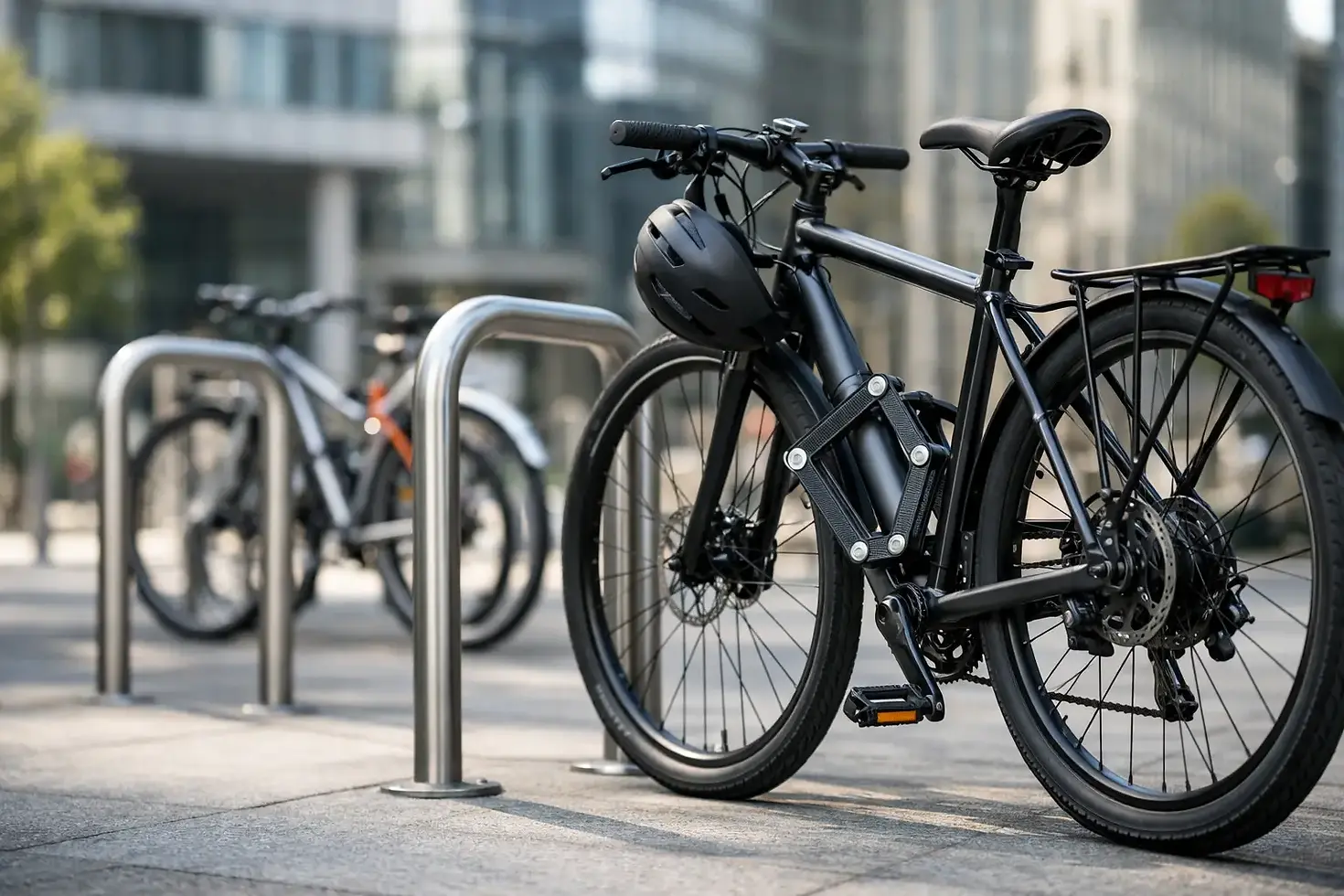
Urban Bike Parking Security Guide
You can lock your frame correctly, come back 20 minutes later, and still find yourself missing a wheel or saddle. That is the problem this urban bike parking security guide is built to solve. In cities, bike theft is rarely all-or-nothing. Thieves take what they can remove fast, and the parts left behind are often the most expensive lesson.
What urban bike parking security really means
Most riders think about bike security as one decision - what lock to carry. In practice, urban bike parking security is a system. It starts with where you park, continues with how you lock the frame, and gets serious when you protect the removable parts thieves target first.
That distinction matters because many bikes are left vulnerable even when they are technically locked. A quick-release front wheel, an easy-to-remove saddle, or unsecured headset parts can turn a locked bike into a stripped bike. If you commute daily, park outside work, stop at stores, or leave your bike at transit stations, you are managing multiple theft risks at once.
The smartest approach is simple: secure the bike as a whole, not just the biggest piece of it.
Start with the parking spot, not the lock
A bad parking decision can weaken even a strong setup. A good one can make theft less attractive before anyone touches your bike.
Look for fixed, well-anchored bike racks in visible areas with steady foot traffic. Visibility matters because thieves want speed and privacy. A rack near storefronts, building entrances, or active sidewalks is usually safer than one tucked behind a wall or in a dim corner of a garage.
Just as important, inspect what you are locking to. Decorative railings, thin signposts, weak wooden fences, and damaged racks create easy escape routes. If the object can be cut quickly, lifted out of the ground, or pulled apart, your lock setup loses value fast.
There is also a time factor. Parking for five minutes outside a busy cafe is not the same as leaving a bike all day near a station. The longer the bike sits, the more complete your security needs to be. Short stops invite opportunistic theft. Long parking windows give thieves time to study, return, and remove components.
Lock the frame correctly, but do not stop there
Your frame is still the foundation of any secure parking setup. If the frame is not locked to an immovable object, everything else is secondary.
The goal is to capture the main triangle of the frame whenever possible and keep the lock placement tight. Less empty space inside the lock means fewer angles for tools. Positioning also matters. Keep the lock away from the ground where it can be attacked more easily with leverage.
But here is the part many riders miss: proper frame locking only protects the frame. It does not automatically protect quick-release or easily removable components. In urban environments, thieves often go after the fastest payout. A wheel can disappear faster than a whole bike. A saddle and seatpost can be gone in seconds. If your setup secures the frame but leaves components exposed, you have only solved part of the problem.
The real weak points are the parts thieves can remove fast
The most commonly targeted bike parts are the ones that come off with minimal tools or no tools at all. Front wheels are obvious targets, especially on commuter and performance bikes. Rear wheels are more protected by the drivetrain, but they are still vulnerable if not secured. Saddles and seatposts are another common loss because they are easy to grab and easy to resell.
Then there are the parts riders forget about until they are gone - headsets, stems, and other key components that can be loosened and removed. Even if those parts are not stolen as often as wheels or saddles, they still create risk, especially on higher-value bikes parked regularly in the same locations.
This is where component-level security stops being optional and starts making sense. If a thief cannot remove the wheel, cannot pull the saddle, and cannot strip key parts quickly, the bike becomes a much less attractive target. That is the point. Theft prevention is not about looking locked. It is about making the theft attempt fail.
An urban bike parking security guide needs a layered system
There is no single product that solves every parking scenario. City riders need layers because theft happens in layers too.
The first layer is your parking choice. The second is a solid frame lockup. The third is component protection. If one layer is strong and the others are weak, the bike is still exposed. A thief does not need to steal everything to ruin your day.
That is why a complete security setup is usually more effective than adding bulk. Carrying heavier gear is not always the same as carrying smarter protection. For many riders, the better move is combining a reliable primary lock with purpose-built hardware that secures the parts traditional locks leave exposed.
Pinhead Bike Locks was built around that exact problem - protecting the entire bike, not just the frame. For urban riders, that means securing wheels, seatposts and saddles, headsets and stems, and other common theft points as part of one defense strategy.
Match your setup to how you actually park
A daily commuter locking outside an office for eight hours needs a different setup than a weekend rider stopping for coffee. Security should match exposure.
If you park for long stretches in public, component security should be treated as standard equipment, not an upgrade. Long-duration parking gives thieves more chances and lowers the odds that someone will interrupt them. In that case, unsecured quick-release parts are an open invitation.
If your stops are short but frequent, convenience matters more. You need protection that stays on the bike and works every day without turning each stop into a project. Riders often under-protect their bikes not because they do not care, but because friction kills consistency. A system that is lightweight, integrated, and easy to live with gets used.
If you travel with a more expensive bike, the stakes are higher. Component theft on premium bikes is costly and frustrating because replacement parts are not cheap, and matching fit or finish can be a hassle. In those cases, securing vulnerable parts is one of the most practical ways to reduce exposure without overcomplicating your routine.
Common mistakes that make theft easier
The most common mistake is assuming a locked bike is a secure bike. It may not be. A frame secured to a rack with both wheels and the saddle left vulnerable is still a target.
Another mistake is relying on the same setup in every environment. A quick errand in daylight is not the same as overnight street parking. Security that feels fine in one context can be inadequate in another.
Some riders also park in the same isolated spot every day out of habit. Predictability helps thieves. If your routine is easy to study and your components are easy to remove, the bike becomes easier to target over time.
Then there is the false economy of replacing stolen parts instead of preventing theft in the first place. One stolen wheel or saddle can cost more than proper component security. Add the downtime, the hassle, and the risk of repeat theft, and the cheap option stops looking cheap.
Build a setup you will actually use every day
The best urban security plan is the one you can follow without fail. That usually means choosing a complete, practical system instead of stacking random fixes.
Think in terms of exposure points. The frame needs a strong primary lock strategy. The wheels need dedicated protection. The saddle and seatpost need to stay with the bike. Other removable front-end components should not be an afterthought if your bike is regularly parked in public.
This approach gives you a cleaner setup with fewer compromises. It also closes the gap that many thieves count on - the gap between a locked frame and an unprotected bike.
If you park in the city, do not wait for theft to tell you where your setup was weak. Protect the parts that leave first, use parking judgment every time, and make your bike a hard target from top to bottom. Peace of mind starts when the easy thefts are no longer easy.


Comments