


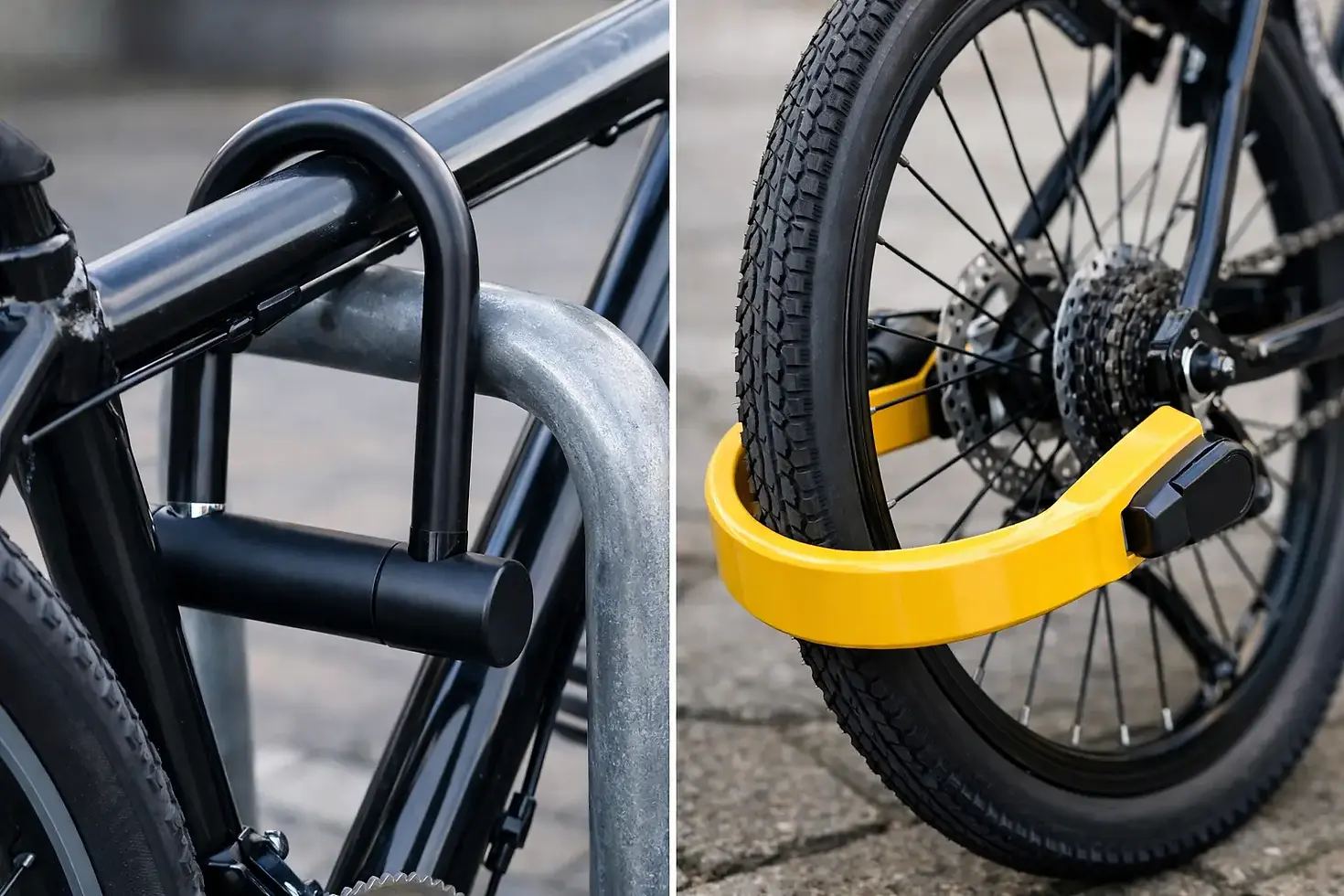
U Lock vs Wheel Lock: What Protects More?
- Dylan Row
- Jul 1
- 6 min read
A bike locked by the frame can still lose a wheel in minutes. That is the problem most riders miss when comparing u lock vs wheel lock. One is built to anchor your bike to something solid. The other is built to stop thieves from stripping the parts they can remove fast and sell fast.
If you park in public, commute daily, or ride a bike with quick-release components, this comparison matters. A stolen front wheel, saddle, or seat post is not a minor inconvenience. It can leave you stranded, force an expensive replacement, and turn a secured bike into a partial loss.
U lock vs wheel lock: they solve different theft risks
A U-lock is designed to secure the frame, and sometimes one wheel, to a bike rack or fixed object. Its main job is to prevent ride-away theft. That makes it essential for many parking situations, especially in cities and other high-risk public areas.
A wheel lock, in the bike security sense, is meant to stop the removal of the wheel itself. Instead of wrapping around a rack, it replaces vulnerable hardware at the axle with a theft-resistant locking system. The same idea can also be applied to seat posts, saddles, headsets, and other components thieves target because they are quick to remove.
So the real answer to u lock vs wheel lock is not which one is better in every case. It is which theft scenario you are trying to stop.
If your biggest risk is someone taking the whole bike, a U-lock addresses that directly. If your biggest risk is losing removable parts while the frame stays behind, a wheel lock addresses the gap a U-lock leaves open. Many riders need both types of protection because theft rarely follows a single pattern.
What a U-lock does well
A U-lock remains one of the strongest tools for securing a bike frame to a fixed object. It is visible, familiar, and effective when used correctly. A properly sized U-lock with a tight fit around the frame and rack reduces leverage and makes opportunistic theft harder.
This is especially useful for short stops, daily commuting, and parking in busy areas. If the bike is never attached to an immovable object, a thief does not need to defeat your component security to take it. They can simply carry the entire bike away.
That said, a U-lock protects only the areas it physically captures. If it runs through the frame and rear wheel, the front wheel may still be exposed. If it secures only the frame, both wheels may be vulnerable depending on your setup. Many riders assume the presence of one strong lock means the whole bike is secure. That assumption is expensive.
Where a U-lock falls short
The biggest weakness is coverage. A U-lock can only secure so much at once, and bike components are designed to come off. Quick-release skewers, standard seat clamps, and accessible headset parts can turn into easy targets, especially when thieves want speed over the entire bike.
This is why riders often return to a locked frame and discover a missing wheel or saddle. The bike was locked. The parts were not.
There is also a practical issue. To secure frame and both wheels with traditional external locks, riders often carry multiple devices. That adds weight, bulk, and friction to everyday use. The more complicated your routine gets, the more likely shortcuts creep in.
What a wheel lock does well
A wheel lock protects one of the most commonly stolen parts on a bike by replacing standard, removable hardware with a dedicated security fastener. It does not depend on wrapping around a rack. It protects the component itself.
That matters because wheels are high-value, easy to remove, and easy to resell. Front wheels are especially vulnerable. On many bikes, they can be gone in seconds if left with standard hardware.
A well-designed wheel lock also improves convenience. Once installed, it stays on the bike. You do not need to carry a second bulky lock just to keep a wheel attached. For riders who want lighter, cleaner security, that is a major advantage.
The same logic extends beyond the wheels. If your saddle, seat post, headset, or other components can be removed quickly, component-specific security closes those openings without turning every ride into a gear-hauling exercise.
U lock vs wheel lock for commuters
For commuters, the answer is usually layered security. A U-lock secures the frame to a rack. A wheel lock protects the component a thief would otherwise remove while the bike is parked.
This matters most when you lock up in the same places every day. Repeated parking creates predictability, and predictable bikes get studied. A thief who cannot take the whole bike may settle for the front wheel, saddle, or seat post if those parts are easier to grab.
A commuter setup should account for real-world behavior, not ideal conditions. If you are locking up before work, after dark, or in a rush, your system needs to be fast enough to use every time. That is where permanent component security has a real advantage. It protects your vulnerable parts even when your parking routine is less than perfect.
When a wheel lock alone is not enough
A wheel lock does not anchor your bike to anything. That is the key limitation. If the frame is unsecured, a thief may still take the entire bike, even if the wheels are protected.
This is why the comparison can become misleading. Riders sometimes treat u lock vs wheel lock like they are direct substitutes. In practice, they are often complementary. One prevents the bike from leaving. The other prevents parts from leaving.
If you store your bike in a controlled indoor space, a wheel lock may handle your most likely risk. But in public parking, frame security still comes first. Component security should then close the weak points traditional locking leaves behind.
The real theft question: whole bike or stripped bike?
Most riders ask, “How do I stop my bike from being stolen?” The better question is, “How do I stop any valuable part of my bike from being stolen?”
That shift matters because partial theft is still theft. A missing wheel can cost hundreds of dollars. A stolen saddle or seat post can ruin your ride home. Damaged dropouts or scratched components can add repair costs on top of replacement.
This is where specialized systems stand apart. They are built around how bike theft actually happens, not how riders wish it happened. Thieves do not always need the whole bike to hurt you. Sometimes they just need the easiest removable part.
A smarter security setup for most riders
For most public parking situations, the strongest answer is not choosing between a U-lock and wheel lock. It is building a system where each one covers what the other cannot.
Use a U-lock to secure the frame to a fixed object. Add wheel security so your components cannot be removed while the bike is parked. If your bike has a quick-release seat post or saddle, secure those too. If you ride a higher-value bike or leave it unattended often, protect every removable part worth stealing.
That is the logic behind total bike protection. Instead of asking one lock to do everything, assign each security product a clear job. That gives you broader coverage, less guesswork, and fewer exposed parts.
Pinhead Bike Locks is built around that exact approach: securing the entire bike, not just the frame. For riders who are tired of replacing stolen components or carrying too many bulky locks, that shift makes sense fast.
Which should you choose?
If you can buy only one product today and you park in public, start with frame security. A U-lock addresses the immediate risk of losing the whole bike. But do not stop there if your wheels or other components can still be removed.
If you already use a U-lock, the next upgrade should usually be component protection. That is where many thefts still happen. A locked frame with missing parts is proof that partial protection is not enough.
The best choice depends on where you park, how long you leave the bike, and which parts are vulnerable. But the pattern is clear. A U-lock protects the bike from being taken away. A wheel lock protects the bike from being taken apart.
If you want fewer gaps in your security, protect both. The best time to close those gaps is before a thief finds them.


Comments